The Best Hyperpigmentation Treatments in Nashua, NH
Hyperpigmentation is one of the most common concerns patients bring to Sansa Med Spa in Nashua, NH — and one of the most frequently undertreated. Not because the options don't exist, but because the wrong treatment for the wrong type of pigmentation doesn't work, and a lot of patients have tried things that didn't move the needle before they found something that did.
The reason hyperpigmentation treatment nashua searches lead people down so many different paths is that hyperpigmentation isn't one thing. Sun damage, melasma, and post-inflammatory hyperpigmentation look similar on the surface and respond differently to treatment. At Sansa, a doctor-owned boutique med spa in Nashua, we start by figuring out which type you're dealing with before recommending anything. That distinction drives everything that follows.
What Is Hyperpigmentation?
Hyperpigmentation is the result of excess melanin — the pigment that gives skin its color — accumulating in certain areas. The skin overproduces it in response to different triggers depending on the type.
It shows up as dark spots, patches, uneven tone, or areas that just don't match the rest of your complexion. It can affect any skin tone, and in many cases it gets worse before it gets better if approached incorrectly.
The Three Main Types — and Why They Matter
Understanding which type of hyperpigmentation you're dealing with isn't academic. It directly determines which treatments will work and which ones could make things worse.
Sun damage and solar lentigines are the result of cumulative UV exposure over time. The spots tend to be well-defined, flat, and most common on areas with the highest sun exposure — face, chest, hands, and shoulders. This type is generally the most predictable to treat and responds well to light-based therapies like IPL.
Melasma is hormonally driven — often triggered or worsened by pregnancy, birth control, or hormonal fluctuations, and significantly aggravated by sun exposure. It tends to appear as larger, more diffuse patches, typically on the cheeks, forehead, and upper lip. Melasma is one of the more stubborn pigmentation concerns because it's ongoing. Even when treated successfully, it can recur with sun exposure or hormonal changes. Aggressive treatments can sometimes make it worse, which is why a careful, layered approach matters here more than anywhere.
Post-inflammatory hyperpigmentation (PIH) occurs after skin trauma or inflammation — acne, a wound, a reaction, or even a prior treatment that irritated the skin. The pigment left behind after the inflammation resolves. PIH tends to fade on its own over time but can take months to years without intervention. It also needs to be approached carefully, since certain treatments can trigger more inflammation and worsen it.
How We Treat Hyperpigmentation at Sansa
Meaningful results with hyperpigmentation — especially for melasma and PIH — almost always require a layered approach. One treatment done once rarely delivers the full picture. We typically build a plan that combines in-office treatment with at-home maintenance.
Lumecca IPL
This is our first-line treatment for sun damage and solar lentigines. It delivers broad-spectrum light energy that targets melanin-rich cells directly. The pigment absorbs the light, heats up, and breaks down — the body then clears it naturally over the following days and weeks. Most patients see noticeable improvement in 1 to 3 sessions. After treatment, pigmented spots will darken before they flake off, which is the expected response and a sign the treatment is working.
IPL is also useful for the redness and vascular component that often accompanies sun-damaged skin — addressing both pigmentation and tone in the same session. It works best on lighter skin tones and on well-defined, sun-induced spots. For melasma, IPL is used more carefully and selectively, since overheating the skin can stimulate more melanin production if not managed correctly.
Chemical Peels
This treatment address hyperpigmentation by accelerating cellular turnover — removing the damaged outer layers of skin and revealing fresher, more even-toned skin beneath. We offer The Perfect Peel, which contains glutathione — a brightening agent that directly targets melanin production — and the No-Peel Peel for patients who want the brightening benefit without visible peeling or downtime.
Peels work particularly well as a complement to IPL. After energy-based treatment addresses the deeper pigment, a peel series helps refine surface tone and prevent the background discoloration from returning as quickly. For PIH specifically, peels are often the right starting point — gentle enough not to trigger more inflammation, effective enough to accelerate the fading process.
Medical-Grade Topicals
These products are the maintenance layer that makes everything else last longer. The right topicals — ingredients like vitamin C, retinoids, niacinamide, and SPF — slow melanin production, support cell turnover, and protect the progress made in-office. Without them, hyperpigmentation tends to return. We'll recommend specific products based on your skin type and what we're treating at your consultation. Our medical-grade products are available through our online store.
Why a Layered Approach Works Better Than Any Single Treatment
Hyperpigmentation sits at different depths in the skin depending on the type and how long it's been there. IPL reaches pigment near the surface effectively. Chemical peels work on the epidermal layer. Topicals address the ongoing process of melanin production between appointments.
Each layer addresses something the others don't. When they're sequenced correctly — based on your specific skin type, tone, and pigmentation pattern — the results are more complete and last longer than any single treatment would produce.
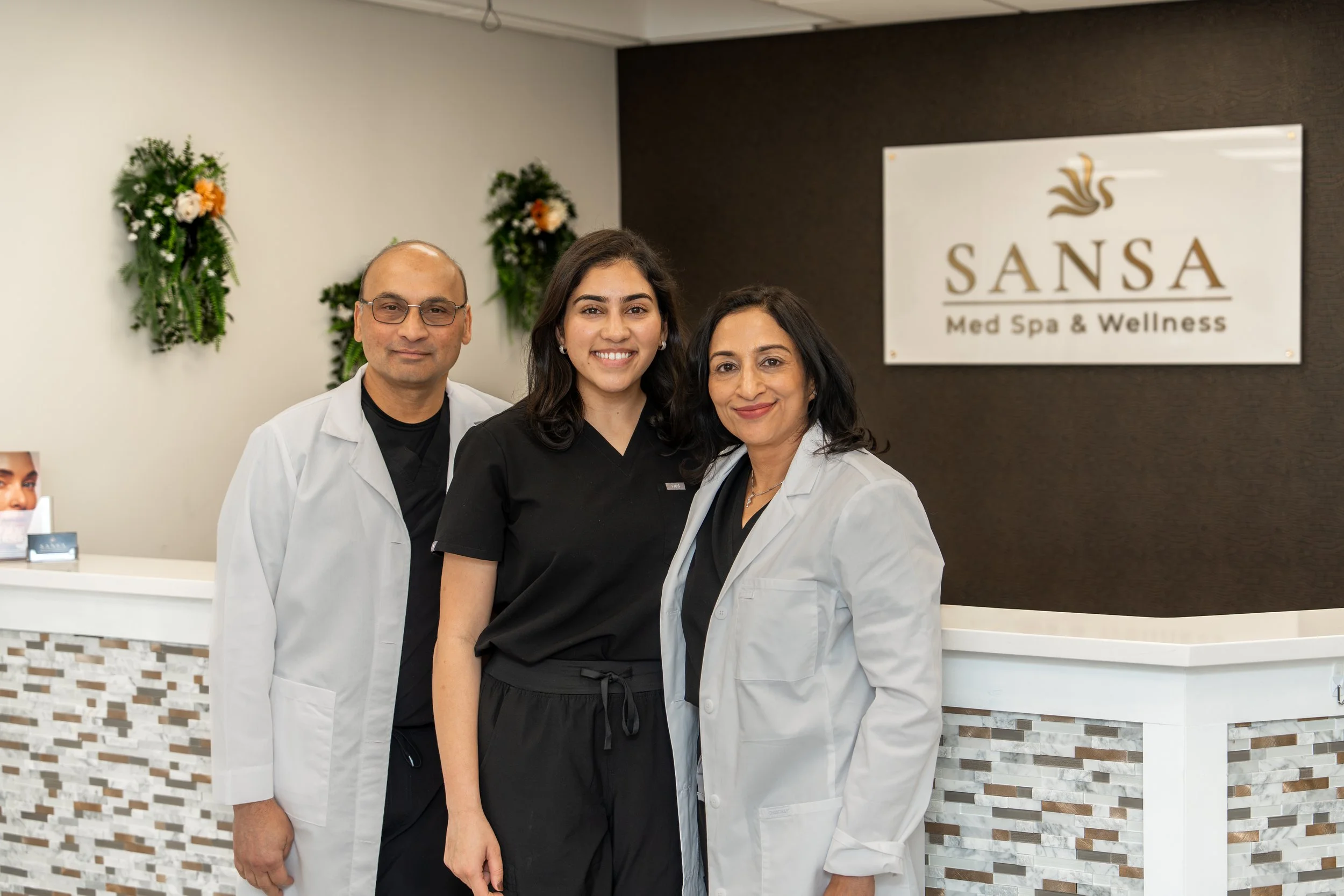
This is also why the consultation matters. Getting the sequence wrong can mean triggering more inflammation with too-aggressive a first treatment, or using IPL settings that aren't appropriate for your skin tone. At Sansa, Dr. Sanjay Gupta and Dr. Neera Gupta assess your skin directly before recommending anything. They bring 40+ combined years of medical experience, and they're performing treatments directly — not delegating.
A NOTE ON SPF: Every hyperpigmentation plan at Sansa includes a conversation about sun protection, because without it, the results don't hold. UV exposure is the primary driver of melanin overproduction — for all three types of hyperpigmentation. Treating dark spots while continuing to accumulate sun exposure is like filling a leaking bucket.
Daily SPF, applied year-round, is the non-negotiable foundation under every treatment plan we build.
How Much Do Hyperpigmentation Treatments Cost in Nashua, NH?
Pricing depends on which treatments are recommended and how many sessions are needed. IPL and chemical peels are priced per session; the number of sessions depends on the type and severity of pigmentation, assessed at your consult.
Flexible payment plans are available through Cherry, with options to spread the cost over 3, 6, 12, 18, or 24 months.
Frequently Asked Questions About Hyperpigmentation Treatment in Nashua, NH
How do I know which type of hyperpigmentation I have? A consultation is the right way to find out. Sun damage, melasma, and PIH can look similar but behave differently, and the treatment approach changes depending on which one we're dealing with. We'll assess your skin directly before recommending anything.
How many sessions will I need? It depends on the type and depth of pigmentation. Sun damage often responds in 1 to 3 IPL sessions. Melasma and PIH typically require a longer, more layered approach. We'll give you a realistic estimate at your consult.
Can hyperpigmentation come back after treatment? Yes — especially melasma, which has an ongoing hormonal component, and sun-induced spots, which can return with continued UV exposure. This is why at-home maintenance and daily SPF are built into every treatment plan we create.
Is IPL safe for darker skin tones? IPL requires careful assessment for darker skin tones. Lumecca IPL has settings that can be adjusted for a range of Fitzpatrick types, but we confirm suitability at your consultation. For some patients with deeper skin tones, a chemical peel-first approach may be the safer starting point.
Can I combine IPL and chemical peels in the same treatment plan? Yes, and for many patients this combination produces the best results. We'll sequence them appropriately — typically not in the same session, but as part of a coordinated plan.
What is the best med spa for hyperpigmentation treatment in Nashua, NH? Look for a provider that identifies the type of pigmentation before recommending a treatment, rather than defaulting to whatever device is available. At Sansa, the assessment comes first. The treatment follows from that.
Ready to Address Your Hyperpigmentation?
Bring in whatever's been bothering you and we'll figure out what's actually driving it. Schedule a consult at Sansa Med Spa in Nashua — we'll assess your skin, explain your options, and build a plan that fits.
Call or text us at (978) 219-4174 or visit our booking portal.
Medical suitability required. Results vary.